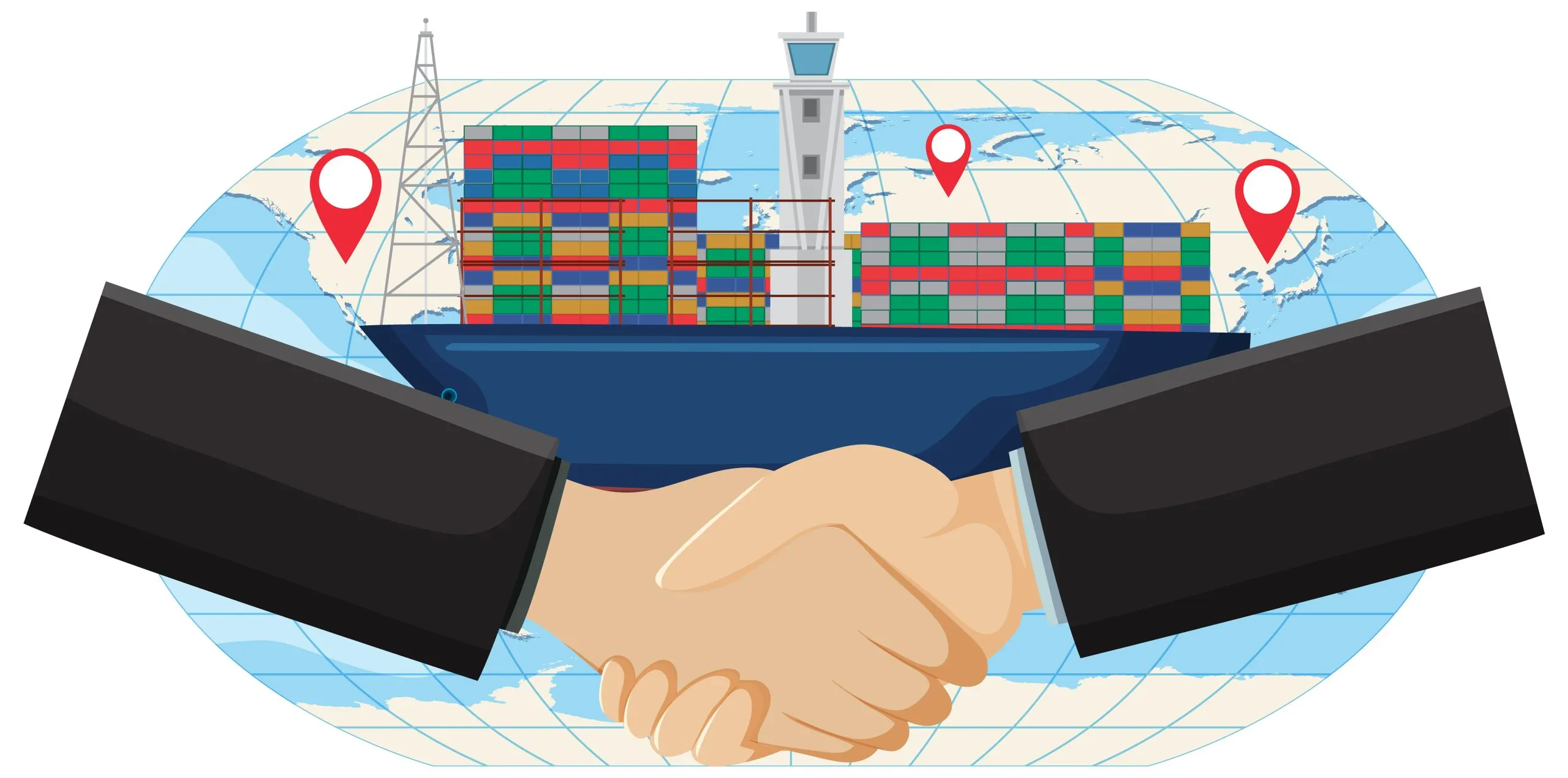
In our super-connected world today, free trade agreements (FTAs) are like the secret sauce for how countries team up on business. They slash tariffs, fling open new markets, and ripple through everything from the price of your morning coffee to how giant companies plot their next big expansion.
Whether you’re running a business, investing your hard-earned cash, shaping policies, or just curious about global trade, getting the scoop on FTAs can give you a real edge in the game of economics.
What is a Free Trade Agreement?
A free trade agreement is a pact between two or more countries designed to reduce or eliminate trade barriers such as tariffs, import quotas, and export restrictions. The primary goal is to encourage cross-border commerce by making goods and services cheaper and easier to move between participating nations.
Unlike customs unions, FTAs allow member countries to maintain independent trade policies with non-member countries.
Example:
If Country A and Country B sign a free trade agreement, businesses in Country A can export products to Country B with minimal or zero tariffs, making their goods more competitive.
Why Free Trade Agreements Matter in 2026
Global supply chains are evolving rapidly due to geopolitical shifts, digital trade, and sustainability regulations. As a result, FTAs are becoming strategic tools rather than just economic policies.
Key Reasons FTAs Are More Important Than Ever:
Supply Chain Diversification – Businesses are reducing reliance on single markets.
Lower Consumer Prices – Reduced tariffs often mean cheaper goods.
Stronger Economic Partnerships – Countries collaborate beyond trade, including technology and innovation.
Increased Foreign Investment – Investors prefer regions with favorable trade rules.
For emerging economies, FTAs can accelerate industrial growth and create employment opportunities.
How Free Trade Agreements Work
A free trade agreement typically includes negotiated rules covering:
- Tariff reductions or elimination
- Intellectual property protection
- Labor and environmental standards
- Investment protections
- Dispute resolution mechanisms
- Digital trade regulations
These agreements are legally binding and often take years to negotiate due to their complexity.
Major Types of Free Trade Agreements
Understanding the structure of FTAs helps businesses identify opportunities faster.
1. Bilateral Agreements
Signed between the two countries.
Example:
The US-Australia Free Trade Agreement improved market access for agriculture, manufacturing, and services.
2. Multilateral Agreements
It involves multiple countries and usually creates larger economic zones.
Example:
The Regional Comprehensive Economic Partnership (RCEP), one of the world’s largest trade agreements, covers about 30% of global GDP.
3. Regional Trade Agreements
Focus on geographic regions to promote economic integration.
Example:
The European Free Trade Association (EFTA) supports trade among several European economies.
Benefits of Free Trade Agreements
Expanded Market Access
Companies can reach millions of new customers without heavy import duties.
Increased Business Competitiveness
Lower production costs allow businesses to price products more attractively.
Economic Growth
FTAs often lead to higher GDP through increased exports.
Job Creation
Export-driven industries typically expand hiring.
Innovation Boost
Exposure to international competition drives technological advancement.
Potential Disadvantages of Free Trade Agreements
While FTAs offer many advantages, they are not without criticism.
Domestic Industry Pressure
Local businesses may struggle to compete with cheaper imports.
Job Displacement
Some sectors shrink as production shifts overseas.
Regulatory Challenges
Aligning standards across countries can be complicated.
Overdependence on Foreign Markets
Economic shocks in partner countries can impact domestic stability.
The key is balanced policy design that protects sensitive industries while encouraging growth.
Examples of Major Free Trade Agreements Worldwide
Here are some influential agreements shaping global commerce:
- USMCA – Replaced NAFTA, strengthening North American trade.
- RCEP – Includes China, Japan, South Korea, Australia, and ASEAN nations.
- CPTPP – Promotes trade across the Asia-Pacific region.
- EU–Japan Economic Partnership – One of the largest open trade zones.
These agreements collectively govern trillions of dollars in trade annually.
How Free Trade Agreements Impact Businesses
For companies planning international expansion, FTAs can dramatically reduce operational barriers.
Businesses Benefit Through:
- Reduced import/export costs
- Faster customs clearance
- Simplified regulations
- Greater investor confidence
Pro Tip:
Before entering a new market, always check whether your country has a free trade agreement in place, as it could significantly improve profit margins.
Free Trade Agreements and Developing Economies
FTAs can be transformational for developing nations by:
- Attracting global manufacturers
- Improving infrastructure
- Enhancing technology transfer
- Increasing export competitiveness
However, policymakers must ensure small businesses are not left behind.
The Future of Free Trade Agreements
The next generation of FTAs is expected to focus heavily on:
- Digital trade and data flows
- Green economy standards
- E-commerce regulations
- AI and technology cooperation
- Sustainable supply chains
Rather than just removing tariffs, modern agreements are becoming frameworks for long-term economic alliances.
Experts predict that mega-regional trade agreements will dominate the next decade.
VAT Registration for Cross-Border Trade
Companies expanding into FTA partner countries often need VAT registration to legally sell goods and services. Value Added Tax systems are common across Europe, the Middle East, and many Asian economies.
Why it matters:
- Ensures tax compliance
- Enables input tax credits
- Prevents legal penalties
- Builds credibility with international partners
For example, businesses entering GCC markets after a trade agreement may need immediate VAT registration to begin operations smoothly
How to Benefit from Free Trade Agreements as a Business Owner
If you want to leverage FTAs effectively:
- Identify tariff reductions relevant to your industry
- Optimize supply chains around partner countries
- Understand rules of origin
- Work with trade consultants or export specialists
- Monitor regulatory updates
Companies that proactively use FTAs often gain a strong competitive edge.
Saudi Arabia Visa MOFA and Trade Mobility
Trade agreements don’t just move goods, they also increase the movement of professionals, investors, and skilled workers.
When sending employees to Saudi Arabia for business expansion, documentation such as the Saudi Arabia visa MOFA (Ministry of Foreign Affairs) approval becomes essential.
Common scenarios include:
- Business travel for partnership negotiations
- Setting up regional offices
- Managing supply chains
- Attending trade exhibitions
An approved MOFA visa helps streamline entry processes, allowing companies to capitalize faster on opportunities created by free trade agreements.
Conclusion
A free trade agreement is far more than a diplomatic arrangement, it is a powerful engine for economic growth, innovation, and global cooperation. As international commerce becomes increasingly interconnected, understanding FTAs is no longer optional for businesses aiming to scale beyond borders.
Organizations that stay informed and strategically adapt to trade agreements will be better positioned to reduce costs, expand globally, and outperform competitors in the evolving marketplace.
Frequently Asked Questions (FAQs)
What is the main purpose of a free trade agreement?
The primary goal is to reduce trade barriers so goods and services can move freely between countries, boosting economic activity.
Who benefits the most from free trade agreements?
Exporters, manufacturers, consumers, and investors typically gain the most due to lower costs and expanded market access.
Are free trade agreements legally binding?
Yes. FTAs are formal treaties enforceable under international trade law.
Do free trade agreements eliminate all tariffs?
Not always. Some sensitive sectors may retain partial tariffs or phased reductions.
How long does it take to negotiate a free trade agreement?
Negotiations can take several years depending on economic complexity and political considerations.

abhilashst
Content contributor at Fairway Business Setup.